Read the tracking pattern
Note whether the belt wanders when empty, under load, in one direction or at the same point on each revolution. A fault that appears only when material arrives suggests a different investigation from an edge that moves sideways each time a joint passes. Record the location and operating condition before selecting a tracking device.
Inspect the cause, not just the belt edge
Review the conveyor alignment, pulley and roller condition, accumulated material and how the feed is presented. A build-up on a pulley changes the surface supporting the belt. An off-centre stream can repeatedly push the loaded belt away from its intended path. A damaged or unsuitable joint also needs attention before an accessory is specified.
Select a tracker for its position
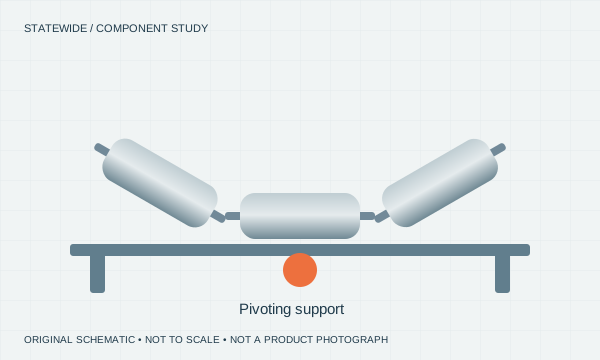
Carry-side troughing arrangements and flat return runs need different equipment. Reversing conveyors require a tracking system explicitly suited to both travel directions. Belt width, speed, tension, mounting space and the condition of the supporting structure determine which options can be considered.
Define the corrective work
The scope may combine cleaning and component replacement, loading-point adjustment, belt-joint work and a suitable tracker. Record the original problem and review belt behaviour after the agreed work, both empty and at representative loading. Tracking equipment cannot compensate for every underlying geometry or belt defect.
Connected services and selection guides
Define the work you need
- Where the belt wanders and whether this changes with loading
- Belt width, travel direction, speed and existing tracker details
- Photos of loading, pulleys, rollers and affected belt edges
- Recent joint repairs, component changes or changes in material