Three joining methods, selected around the belt construction, operating tension and conveyor geometry. A joint must also pass the pulleys, cleaners and transfer points.
01 / STEEL FASTENERS
Mechanical belt splicing
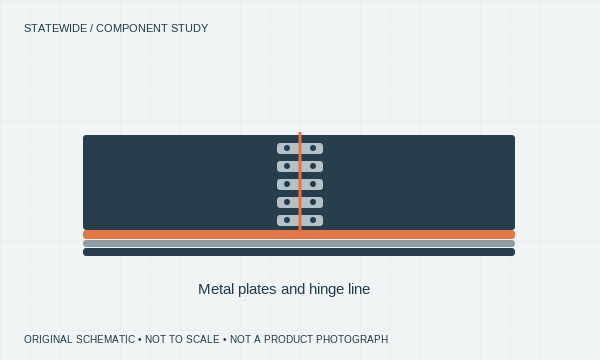
Metal plates, hooks or hinged fasteners join prepared belt ends. The exact fastener family depends on belt thickness, carcass and operating tension.
- Applications & belt types
- Suitable fabric-reinforced rubber or light-duty belts where an approved mechanical fastener meets the duty. Common uses include replacements and repair access.
- Advantages
- Some hinged systems can be opened for belt removal. Installation can reduce the equipment and curing requirements associated with a bonded joint.
- Limitations
- Protruding or worn fasteners can affect cleaners and product transfer. Check pulley diameter, joint rating, corrosion exposure and inspection needs.
02 / BONDED RUBBER JOINT
Belt vulcanisation
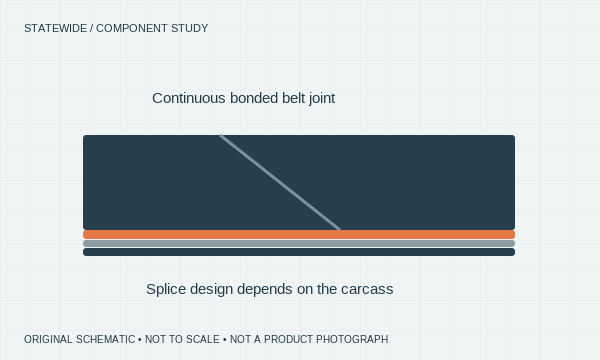
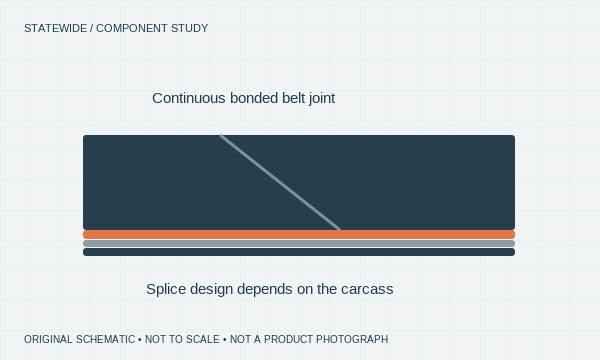
Hot vulcanisation joins a prepared rubber belt using compatible splice materials, controlled heat and pressure. The splice design depends on whether the carcass is textile or steel cord.
- Applications & belt types
- Rubber conveyor belts whose construction and condition permit the manufacturer’s prescribed vulcanised splice.
- Advantages
- A correctly made joint provides a continuous carrying surface without exposed metal fastening hardware.
- Limitations
- Requires suitable access, equipment, preparation and process control. Splice length and materials must be specified; a damaged carcass can make jointing unsuitable.
Cold bonding is a separate adhesive joining process. Its suitability and curing requirements must be assessed for the particular belt rather than assumed equivalent to hot vulcanisation.
Enquire about belt vulcanisation03 / FABRIC WEB & POLYMER LACE
Non-metallic spiral-lace splicing
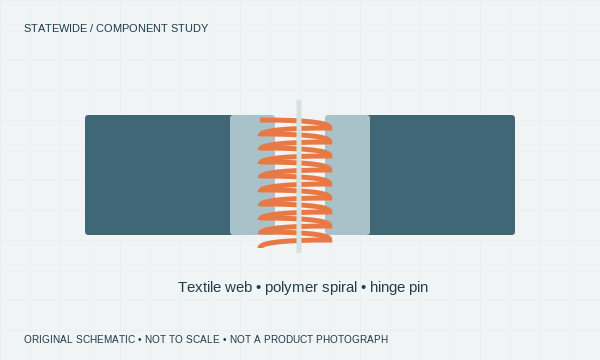
The industry term for this fabric-strip method is non-metallic spiral-lace splicing. Textile webbing carries polymer spirals; a removable polymer hinge pin connects the two sides on a compatible belt.
- Applications & belt types
- Compatible light-duty belts in applications such as baggage or product handling where metal-free, low-profile joining is required. Belt and lace compatibility must be checked.
- Advantages
- A low-profile, non-marking joint with a removable connection can assist belt change-out and cleaning access.
- Limitations
- Operating tension, pulley diameter, temperature and joining process are system-specific. This is not a universal replacement for steel fasteners on heavy bulk belts.
Different construction: flexible rubber screw splices use a reinforced strip but still contain metal screws. They must not be described as non-metallic. Integrated spiral-mesh belts are another specialist construction and need their own replacement specification.
Enquire about non-metallic spiral-lace splicingPlan a belt-jointing enquiry
Supply the belt data sheet, thickness, width, operating tension, smallest pulley, cleaner type and required opening or shutdown access. Include any requirement for metal-free joining. Final method and service availability require confirmation.
Enquire about belt joint selectionBelt splicing & vulcanisation: what we deliver
Performed directly by Statewide Conveyors across Victoria. The quotation defines the work included for your equipment and site.
- When to choose this service
- A new belt joint, failed splice or joint replacement during a shutdown.
- Scope we agree with you
- Belt construction, joining method, joint preparation, access and the required equipment.
- Handover and acceptance
- Joint details and agreed inspection checks before the conveyor is returned to service.
Related products & services
Technical references
Manufacturer information used to check product categories. These links do not imply a distributor appointment or a supply partnership.