PRODUCTS & REPLACEMENT COMPONENTS
Conveyor belts.
Parts & components.
Belting, support components and replacement parts, organised around the job they do on your conveyor.
Supply and replacement options are reviewed against your specification. Specialist configurations and availability require confirmation with your quotation.
01 / PRODUCT FAMILY
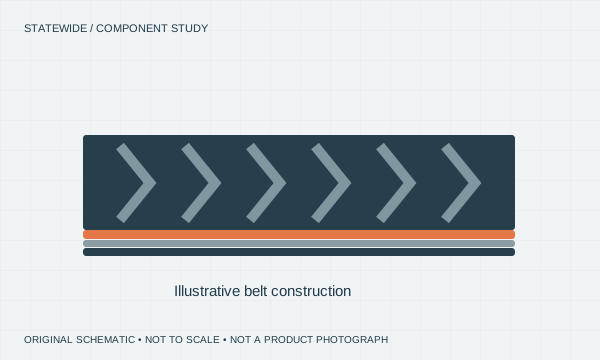
Rubber Conveyor Belting
02 / PRODUCT FAMILY
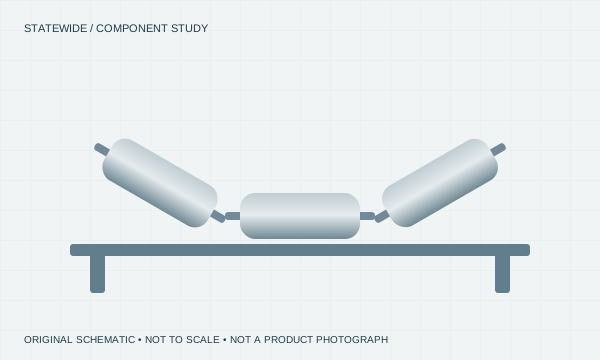
Rollers & Idlers
03 / PRODUCT FAMILY
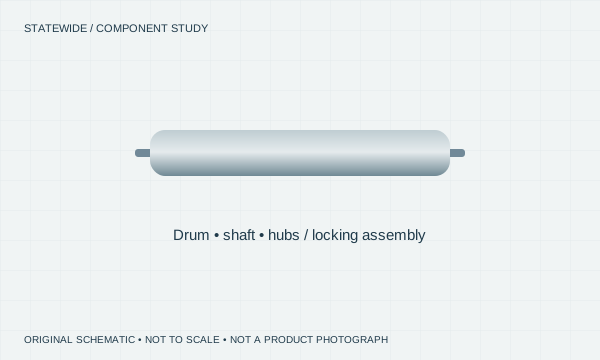
Pulleys
04 / PRODUCT FAMILY
Belt Cleaners
05 / PRODUCT FAMILY
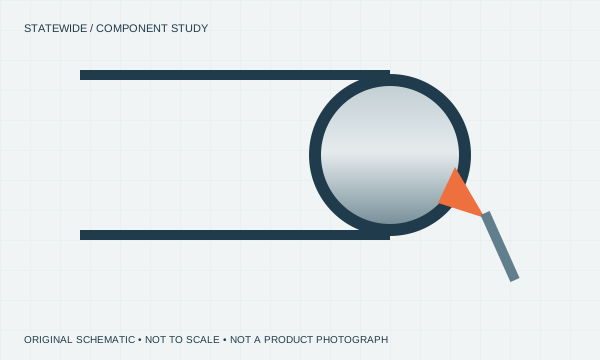
Belt Fasteners & Splicing Products
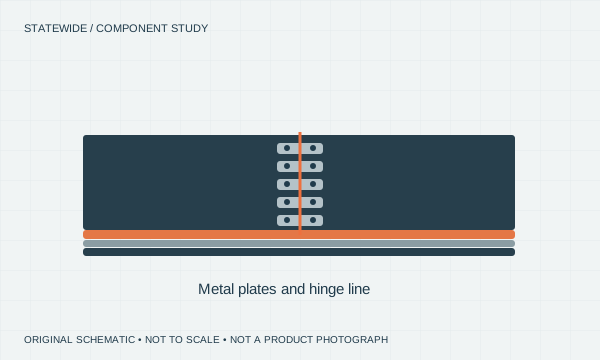
Mechanical belt fasteners
Mechanical joints connect belt ends using a system selected for the belt thickness, tensile rating and pulley diameter. Wire-hook, hinged and plate designs suit different duties.
View options ↗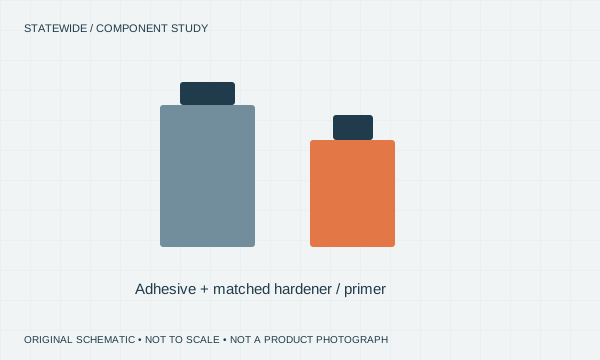
Adhesives & bonding systems
Rubber bonding and cold-splice work require compatible adhesives, primers and preparation methods. Select the complete bonding system for the substrates and working conditions.
View options ↗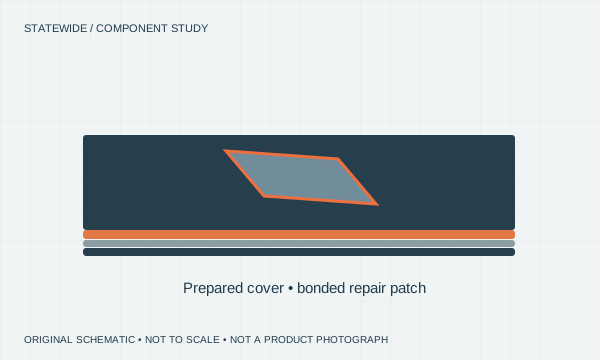
Belt repair materials
Repair patches, bands and reinforcement materials can address suitable areas of local belt damage. Assess the carcass and root cause before deciding whether a repair is appropriate.
View options ↗06 / PRODUCT FAMILY
Skirting, Sealing & Wear Protection
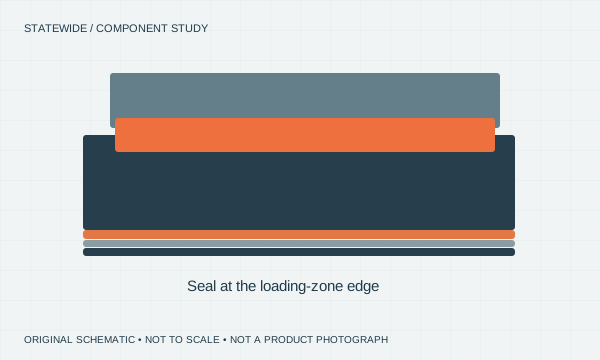
Skirting rubber & polyurethane
Skirting helps contain material at transfer points and loading zones. The material must balance sealing performance with friction and wear against the moving belt.
View options ↗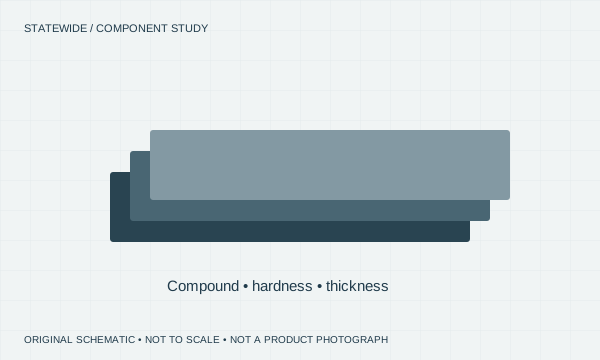
Sheet rubber & wear lining
Sheet rubber and lining compounds protect surfaces and support sealing duties. Abrasion, oils, chemicals, temperature and weathering each call for a different material selection.
View options ↗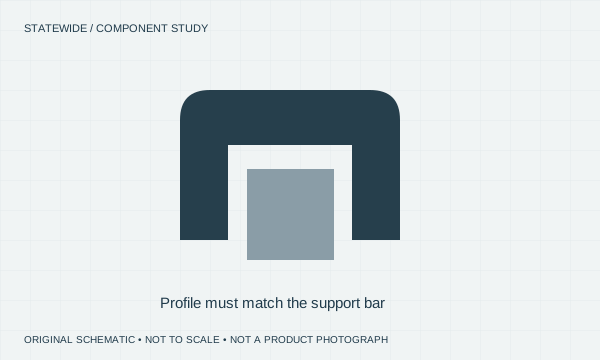
Capping rubber
Profiled capping strips sit over screen support bars to protect the screen underside and supporting steelwork. Accurate profile measurements are essential for a secure fit.
View options ↗07 / PRODUCT FAMILY
Impact & Loading-Zone Components
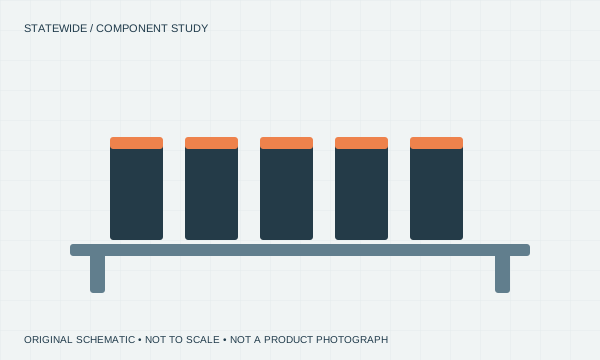
Impact beds & bars
Loading-zone support helps manage the impact of falling material while supporting the belt beneath the skirts. Frame geometry and replacement bar dimensions need to match the conveyor.
View options ↗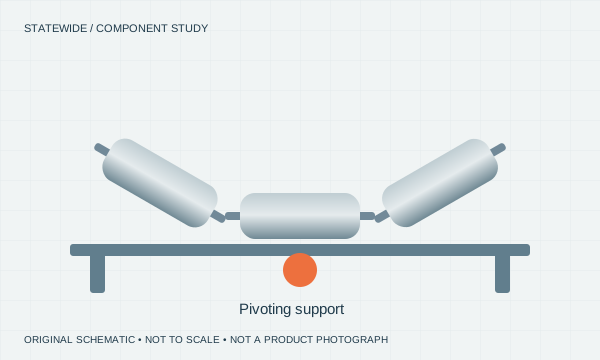
Belt tracking systems
Tracking units help manage lateral belt movement. Troughing, return and reversible arrangements should be selected alongside checks for loading, alignment and component condition.
View options ↗08 / PRODUCT FAMILY
Conveyor Accessories
Elevator buckets
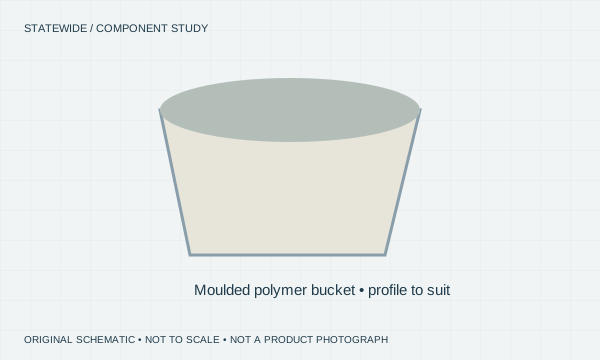
Bucket shape and material influence how an elevator loads, carries and releases bulk product. Match the bucket specification to the material, speed and existing mounting pattern.
View options ↗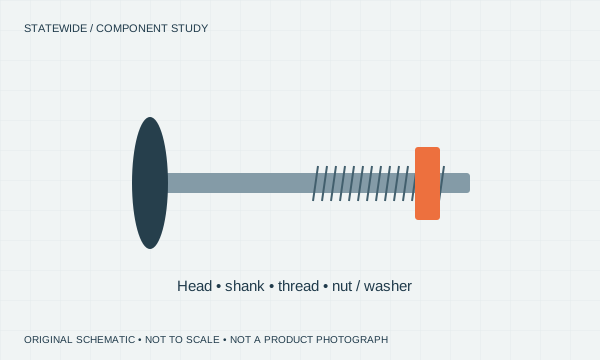
Elevator bolts & fittings
Bucket elevator hardware secures buckets to the belt and supports the joining arrangement. Confirm bolt style, length, washer type and the existing bucket hole pattern.
View options ↗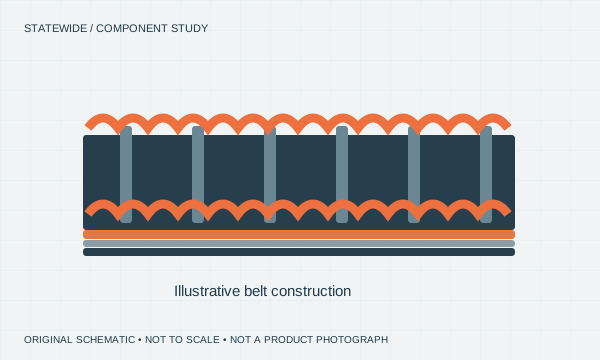
Corrugated sidewall
Flexible corrugated walls add edge containment to a compatible conveyor belt. The wall height, cleat pattern and pulley arrangement must be considered together.
View options ↗09 / PRODUCT FAMILY
Other Belting & Handling Applications
PVC & PVG conveyor belts
PVC and PVG constructions serve a range of handling applications, with flat or profiled options. Selection depends on the product, operating environment and the belt construction required.
View options ↗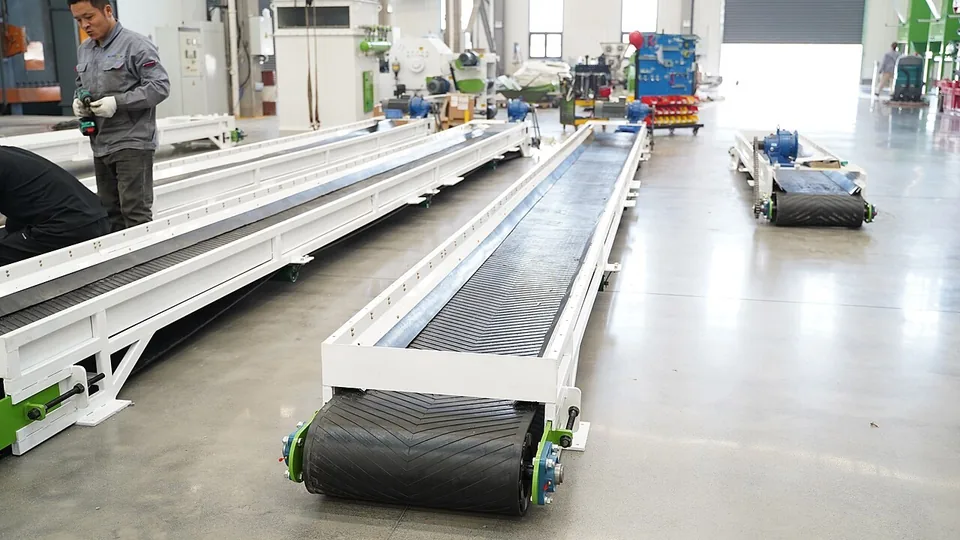
Flat & incline belts
Flat transport and inclined conveying place different demands on the belt surface. Start with the material and incline, then consider whether a smooth finish or a raised profile is appropriate.
View options ↗
Screen-house & feeder belts
A short feeder conveyor meters material from a hopper or bin into the next stage of a process. Belt selection needs to account for loading pressure, feed rate and local wear.
View options ↗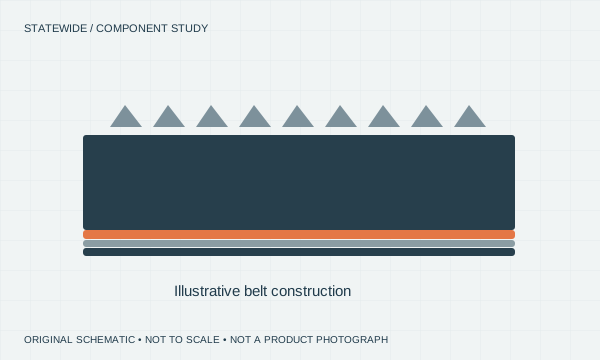
Screen & crusher belts
Mobile crushers and fixed screening plants expose belts to impact, abrasive loads and tight installation spaces. Replacement dimensions and access planning are as important as the belt compound.
View options ↗
Radial & fixed stacker belts
Stacker conveyors distribute bulk material into stockpiles. The belt needs to suit the changing boom position, material behaviour and wear at the loading zone.
View options ↗
Recycling & sorting belts
Recycling lines move mixed materials between inspection, separation and processing stages. Belt surface and construction should suit the waste stream, oils, sharp objects and cleaning requirements.
View options ↗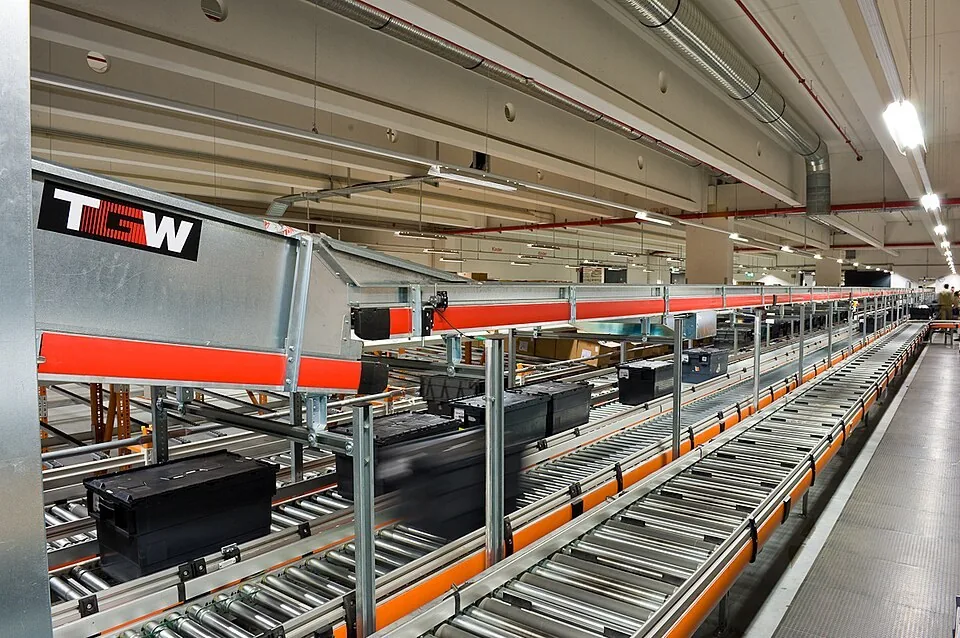
Powered roller systems
Gravity and motor-driven rollers move cartons, packages and other unit loads through handling lines. Roller geometry, drive arrangement and load support influence the correct replacement components.
View options ↗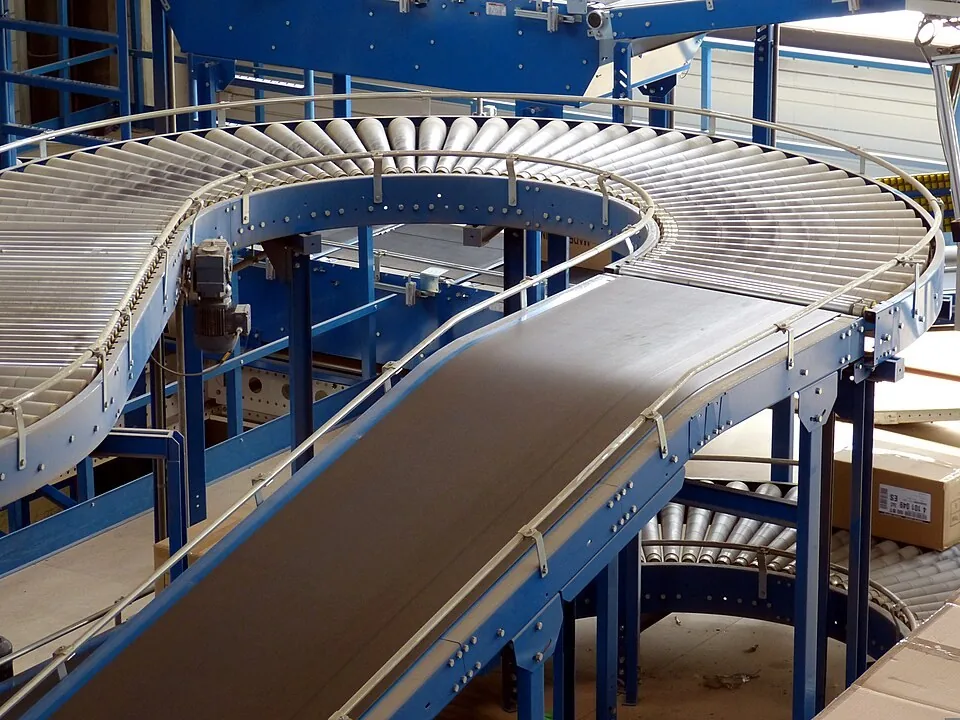
Curved conveyor belts
Curved belts keep products moving as a line changes direction. Belt shape, guide arrangement, angle and inside radius need to match the installed conveyor.
View options ↗
Live-bottom trailer belting
Live-bottom trailers use a moving floor belt to discharge their load. Identify the trailer system, belt dimensions, joint design and load conditions before arranging a replacement.
View options ↗