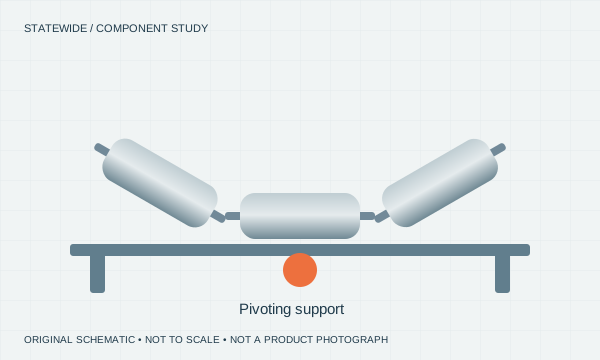
Choose for the carry or return run
The carry side supports the loaded belt, often in a trough, while the return belt may run flat or in a different arrangement. A tracking unit must match the position where it will work. Identify the intended mounting location and the point where the belt first starts to drift.
Account for changing operating conditions
Record whether the conveyor reverses and whether wandering changes with loading. A tracker suitable for one-way operation is not automatically suitable for a reversing belt. Confirm belt width, speed, tension and mounting restrictions against the selected manufacturer’s requirements.
Check conditions before choosing hardware
Uneven feed, seized rollers, build-up and an unsuitable splice can contribute to drift. Correcting these conditions may change the tracking requirement. Assessment should establish whether the proposed unit addresses the remaining problem or would merely respond to a fault that needs repair.
Plan installation and review
The scope should identify mounting work, access for adjustment and any associated roller or belt repairs. After the agreed changes, review the belt under the operating conditions that originally caused wandering. Record observations to guide ongoing inspections rather than assuming the unit removes every maintenance need.
Connected services and selection guides
Define the work you need
- Carry-side or return-side location and trough arrangement
- Belt width, travel direction and operating speed
- Mounting-space photographs and existing equipment details
- Tracking behaviour empty, loaded and near the joint