Distinguish leakage from an unstable load
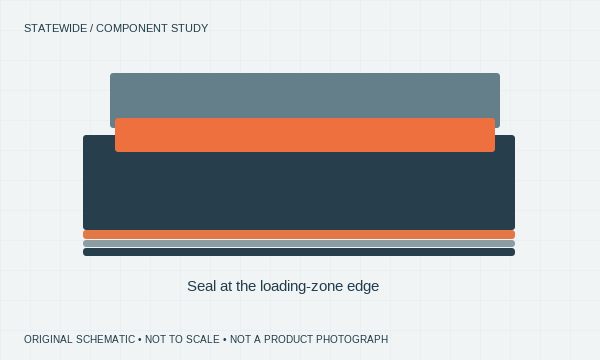
Material escaping beside a skirt may indicate a worn seal, an unsupported belt or an off-centre feed. Material rolling over the belt edge further downstream may instead relate to surges, loading shape or the conveying route. Identifying where the loss begins is essential before specifying replacement rubber.
A stable belt supports a consistent seal
The loading zone needs support appropriate to the impact and material flow. Belt movement beneath a skirt makes a steady seal difficult to maintain. Review the support beneath the loading and settling area alongside the skirt, rather than tightening the seal against an unstable surface.
Separate sealing from wear protection
Skirting contains loose material at the belt interface. Internal wear liners protect the chute and help keep the main stream away from vulnerable sealing surfaces. Their positions, clearances and replacement access need to be considered together. A transfer modification may need layout work as well as replacement consumables.
Include dust and housekeeping in the brief
Fine material and displaced air can escape even when large particles remain contained. Record the material condition and enclosure arrangement so dust concerns can be referred to an appropriate design scope. Agree how accumulated material will be removed and how seals will be inspected after changes.
Connected services and selection guides
Define the work you need
- Where spillage begins and whether it occurs continuously or during surges
- Belt and chute widths, loading height and peak feed
- Skirt, liner and support photographs with visible clearances
- Fine-material or dust concerns and existing enclosure details