INDUSTRIAL CONVEYING & MATERIAL HANDLINGVICTORIA-WIDE CONVEYOR SERVICES
Statewide ConveyorsEnquire

Belting

Live-bottom trailer belting

Live-bottom trailers use a moving floor belt to discharge their load. Identify the trailer system, belt dimensions, joint design and load conditions before arranging a replacement.

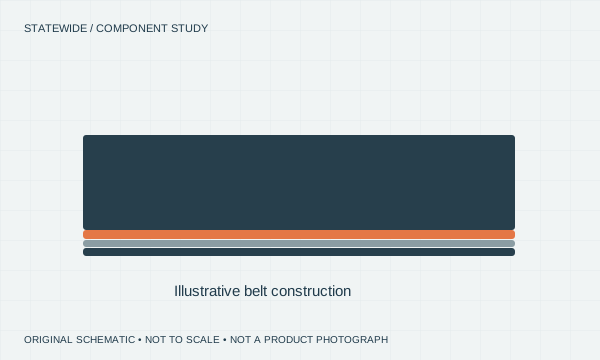
Original schematic of live-bottom trailer beltingOriginal schematic · illustrative configuration, not to scale · Illustration & source notes

A trailer’s moving belt floor unloads the payload through its designed discharge. Belt and joint selection are system-specific.

Supply and replacement options are reviewed against your specification. Specialist configurations and availability require confirmation with your quotation.

Types & configurations

01 / Live-bottom trailer belting

Moving-floor belt
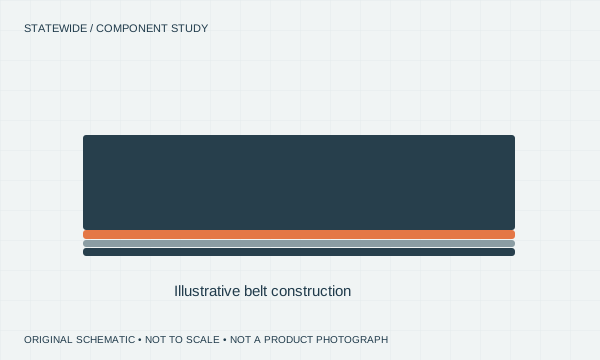
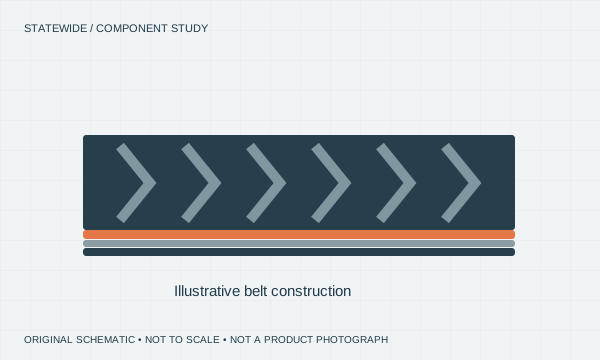
Original schematic of moving-floor belt; illustrative configuration, not to scale
Original technical illustration · configuration requires confirmation

Carcass, underside and width must suit the trailer support and drive arrangement.

Enquire about moving-floor belt

02 / Live-bottom trailer belting

Mechanical connection
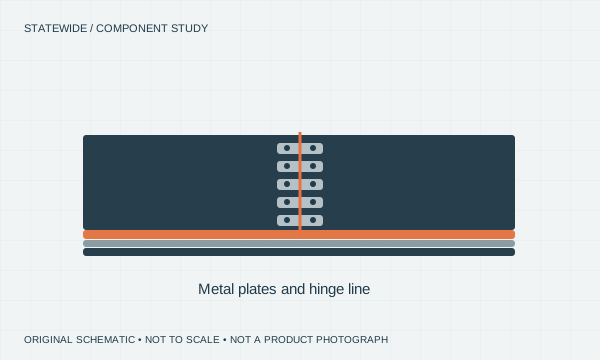
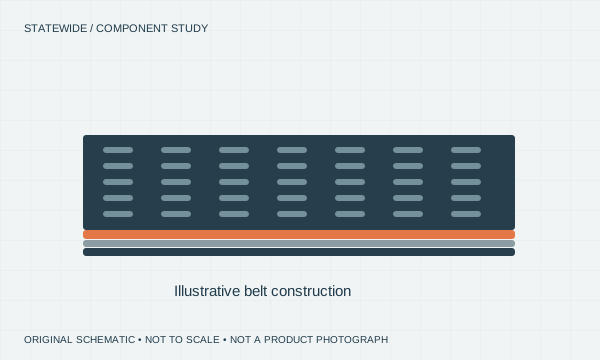
Original schematic of mechanical connection; illustrative configuration, not to scale
Original technical illustration · configuration requires confirmation

Joint style and finished length need to match the system and the available adjustment.

Enquire about mechanical connection

Selection details that matter

Trailer make/model, belt width and length, fastener details, load type and underside photographs.

Supply, replacement & customisation

Check the original trailer specification before a substitute belt is ordered; cover thickness alone does not establish compatibility.

Enquire about live-bottom trailer belting
Technical references

Manufacturer information used to check product categories. These links do not imply a distributor appointment or a supply partnership.
CONTINUE EXPLORING

Related belting

Original schematic of profile & cleated beltingBelting

Profile & cleated belting

Surface profiles help retain material as conveyor inclination increases. The choice of cleat shape, height and spacing depends on product size and the way material releases at discharge.

Explore
Original schematic of reinforced carcass beltingBelting

Reinforced carcass belting

CFW textile construction is designed around resistance to tearing and demanding loading conditions. Consider carcass behaviour alongside the belt cover when sharp or irregular material is part of the process.

Explore

YOUR NEXT PROJECT

Let’s talk conveyors.

Share the material, the challenge and the work you need done.

Start an enquiry