From aggregate storage to the batch
Batch plants rely on conveyors and feeders to move sand and stone from bins towards weighing and mixing equipment. The requirement includes consistent feed, clean discharge and separation between materials. Conveyor capacity and feeder behaviour must be considered with the plant’s batch sequence.
Keep feed and transfer areas clear
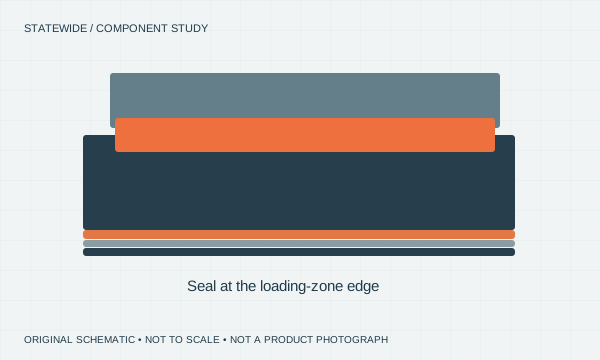
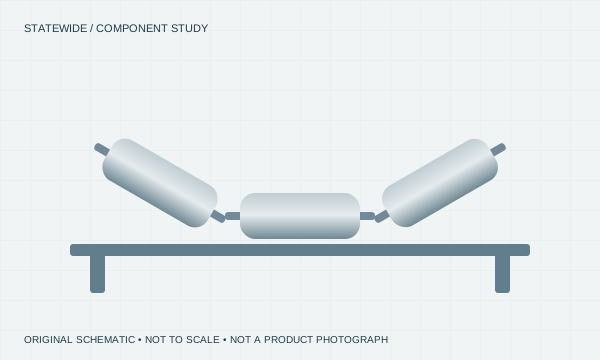
Fine sand escapes through worn skirts, while trapped aggregate can damage a belt at the hopper outlet. Inspect the loading support, clearances and return rollers before specifying a new belt. Build-up beneath the conveyor increases housekeeping work and can interfere with moving parts.
Repairs within the production window
Short replacement belts, mechanical joints and component changes must suit the pulley diameters and feed arrangement. Planned inspection helps identify joint wear, misalignment and seized rollers before a production interruption. Any alterations around weigh equipment need coordination with the plant’s controls and calibration requirements.
Batch plants: keep feed and discharge predictable
Aggregate bin discharge
High local load and trapped stone
Assess the feeder belt, support and hopper outlet clearances.
Transfer to weighing
Sand leakage and off-centre feed
Review skirting and alignment without assuming changes to the weighing system.
Inclined feed to mixing
Rollback or incomplete discharge
Check profile suitability, material moisture and outlet geometry.
Coordinate conveyor work with the batching plant
Clarify whether the fault lies in material transport, feed control or weighing. A mechanical conveyor repair does not include controls changes or calibration unless specifically agreed. After work, coordinate checks of material flow with the plant operator and the parties responsible for the batch sequence.
Explore suitable products and support
Tell us about your operation
- Aggregate grades, moisture and bin or feeder arrangement
- Belt dimensions, pulley diameters and existing joint type
- Location of spillage and effects on batching
- Access around bins, scales and the proposed work window