Match the surface to the travelling material
An incline that handles dry material satisfactorily may behave differently when the same feed is wet, rounded or oily. Record the operating angle and the actual material condition. Belt speed and loading consistency also influence how material settles and travels.
Compare profiles, cleats and sidewalls
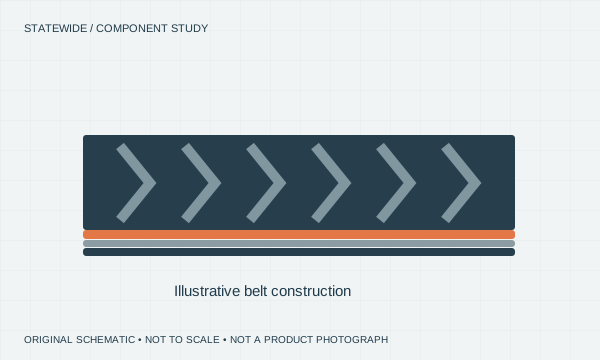
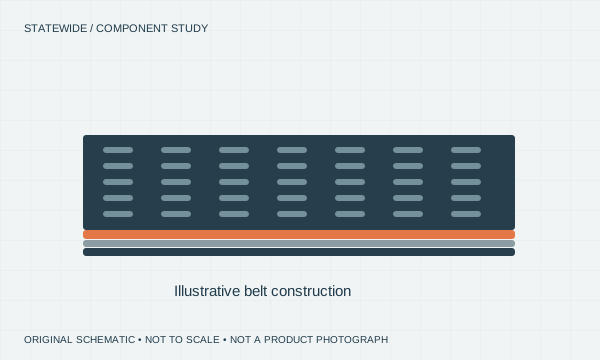
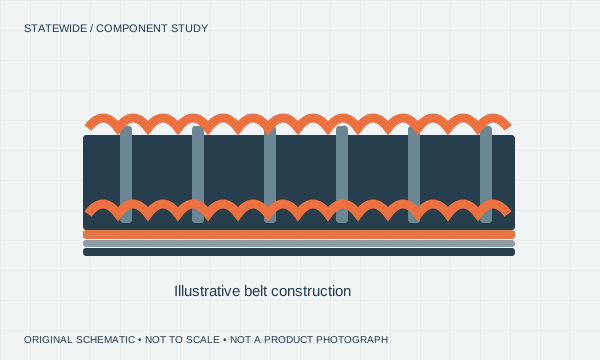
Chevron profiles add surface retention within their intended duty. Taller cleats and sidewall arrangements create a different carrying geometry and require compatible conveyor components. Selection depends on material size, required capacity, incline and how the belt passes through transitions and around pulleys.
Check release at the discharge
Retaining material uphill is only useful if it leaves the belt at the intended point. Sticky products can remain between profiles, while oversized pieces can bridge a restricted outlet. Review the receiving hopper or chute, clearance and cleaning access before settling on a fabricated belt.
Treat modifications as a system change
Changing profile height or belt construction can affect return support, pulley compatibility and the available space around the conveyor. A custom belt enquiry should include those interfaces. Where the route or transfer must change, begin with a design review rather than a belt-only replacement.
Connected services and selection guides
Define the work you need
- Incline, belt route and minimum pulley diameters
- Material dimensions, moisture and rollback conditions
- Current belt profile and required conveying rate
- Discharge arrangement, return clearance and cleaning method