Create clearance for a defined maintenance task
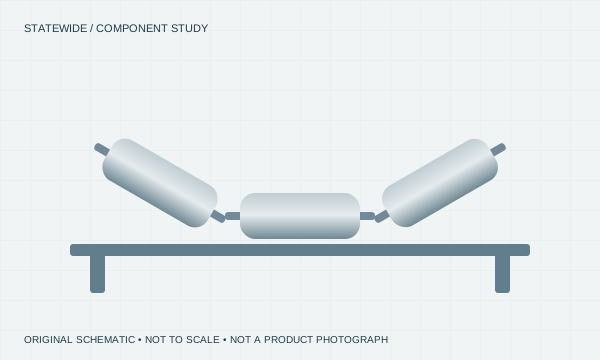
Belt-lifting equipment may provide local clearance to service compatible idlers or other components. Its suitability depends on the belt, load and supporting structure. The required lift must be established from the actual removal task and the equipment manufacturer’s limits.
Confirm the installation envelope
Measure belt width, stringer spacing and the available space above and below the belt. Note the belt profile, return arrangement and nearby obstructions. Different lifter configurations use different support positions; dimensions and rated capacity must be checked for the exact model.
Work within the site’s lifting arrangements
Conveyor isolation, stored energy and the condition of supporting structures require assessment by competent personnel. Do not improvise support or work beneath an inadequately secured belt. Equipment selection must be part of the site’s approved maintenance method, not a substitute for it.
Coordinate the full maintenance scope
Identify which idlers or parts will be replaced, how they will be removed and how access will be restored. A planned shutdown can coordinate replacement components, lifting resources and inspections. Supply or attendance remains subject to confirmation of the equipment and work scope.
Connected services and selection guides
Define the work you need
- Belt width, profile, stringer spacing and proposed lifting location
- Required maintenance clearance and components being removed
- Known belt-loading conditions and support information
- Lifter model if available, site location and shutdown dates